Skip to content
BUILDING-RESILIENT-NEIGHBOURHOODS-LOGOBuilding Resilient Neighbourhoods. Beside the text there is bright green house with orange shutters and a purple door with a red heart coming out of the chimney. In front of the house there is a stick figure on a bike.
  • About
  • Community resilience
  • Neighbour to Neighbour ProgramsExpand
    • Connect & Prepare
    • Neighbours Helping Neighbours
    • Resilient Streets
  • Resources
  • Stories & news
BUILDING-RESILIENT-NEIGHBOURHOODS-LOGOBuilding Resilient Neighbourhoods. Beside the text there is bright green house with orange shutters and a purple door with a red heart coming out of the chimney. In front of the house there is a stick figure on a bike.
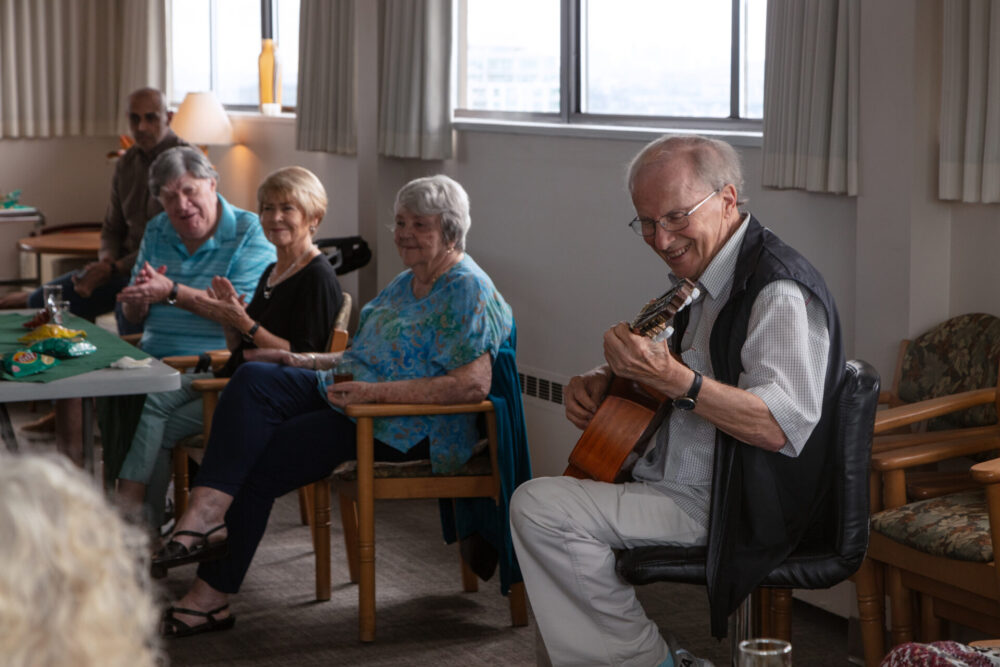
An elderly pale-skinned man plays guitar in a chair at the front of a room with a long table. Three other elders are sitting at the table and are clapping and smiling.
Neighbours Helping Neighbours | Resilience

How Neighbourly Connections Can Help Us “Age in the Right Place”

Working through common attitudes and resistances towards neighbourly helping.

ByBRN December 17, 2025December 19, 2025

Building Resilient Neighbourhood’s (BRN’s) Neighbours Helping Neighbours (NHN) pilot—done in collaboration with  Hey Neighbour Collective and ten delivery partners—brought residents of multi-unit housing together to learn about and nurture intergenerational neighbourly support. A key learning question was: Can a culture of mutual support be established among neighbours that will help people, especially older adults, age in their own homes or “in the right place”?

The answer from the pilot: A resounding “yes”!

NHN activities ranged from lobby intercepts, surveys, and workshops where residents discussed how to help each other, to resident-led projects setting up systems to help each other on a day-to-day basis or during times of illness or emergencies.

Across all of the activities, it became clear that strengthened social connections—especially alongside growing familiarity and trust—helped create the foundations for residents to ask for, give, and receive help.

In addition, as residents became more connected with each other and with delivery partner organizations, these residents also became more connected to other community services, supports, and resources that could help them age in place.

And while some residents initially had reservations and concerns about asking for or offering help, these resistances were lowered as they openly discussed and became more comfortable with each others’ needs, and established a shared sense of appropriate boundaries.

Finally, when neighbours collaborated to set up any kind of simple system or structure to facilitate mutual assistance—such as an emergency preparedness plan or an ask/offer bulletin board—this helped establish and normalize a culture of helping among one another and across their entire building.

So, although the NHN pilot was short-term, some of the most important elements that help activate neighbourly helping and support aging in place quickly emerged!

Learn more in the Neighbours Helping Neighbours: Pilot Learning Report 2023-2025.


Post Tags: #Community stories & examples#Featured#NHN Story

Subscribe

* indicates required
/* real people should not fill this in and expect good things – do not remove this or risk form bot signups */

Intuit Mailchimp

  • Home
  • About
  • Stories & news
  • Resources
  • Contact
  • Neighbours Helping Neighbours
  • Connect & Prepare
  • Community resilience
  • Resilient Streets
Facebook X Linkedin

Search this site

Search

© 2025 Building Resilient Neighbourhoods All Rights Reserved.

This site is supported by Pink Sheep Media.

Stronger communities begin with stronger ties.

  • Building Resilient Neighbourhoods
  • About
  • Neighbour to Neighbour Programs
    • Neighbours Helping Neighbours
    • Connect & Prepare
    • Resilient Streets
  • Resources
  • Stories & news
  • Contact
Facebook Twitter
Search